
Edward Ashby
About the Author
Science Fiction and Fantasy Are in My Blood.
My love of science fiction and fantasy began before I even had the vocabulary to describe either genre. In the early 1980s, my father was a die-hard Star Trek fan, and our household operated around that devotion with near-religious discipline. Every weekday at 7 PM, during the dinner my mother so lovingly prepared, we gathered around the television. Pops would meticulously adjust the aluminum foil on the metal "bunny-eared" antenna, coaxing the best possible picture from our black-and-white set, because missing a moment of Star Trek simply was not an option.
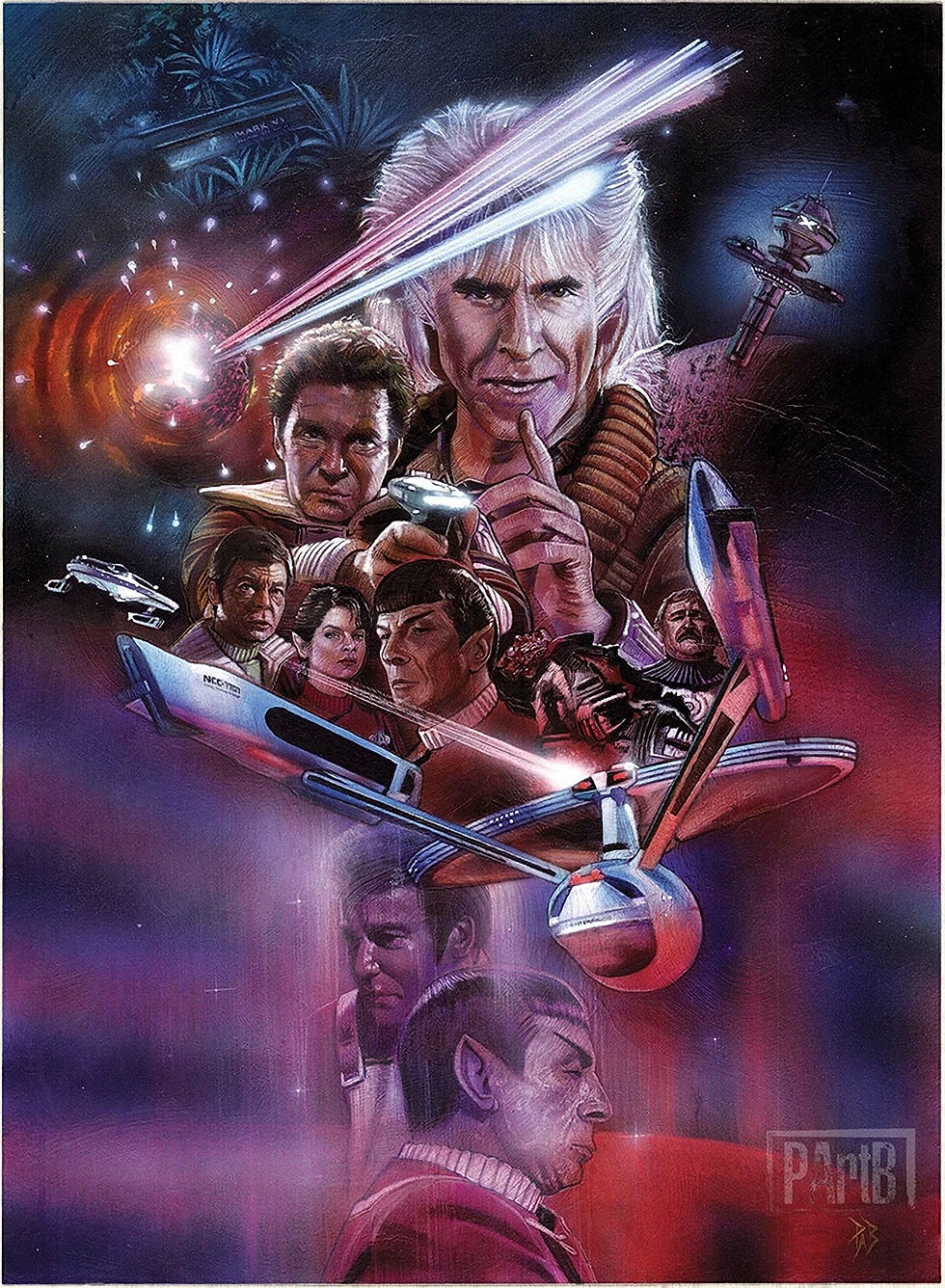
I didn't share my father's passion for the series itself, at least not at first. But then he introduced me to the film that would genuinely launch my lifelong journey into science fiction and fantasy storytelling, Star Trek II: The Wrath of Khan. It was my first real taste of a truly character-driven narrative, and the villain Khan in particular left a permanent mark on my imagination. Even at that young age, something clicked. That film awakened in me a deep appreciation for complex, layered storytelling within the worlds of science fiction and fantasy that I already loved so dearly.
My father recognized something in me that I hadn't yet recognized in myself. Seeing that I was drawn to more sophisticated storylines at such a young age, he began searching for science fiction and fantasy films that could satisfy my growing appetite. He didn't have to look far. The next franchise he introduced me to became far more than entertainment. The original Star Wars Trilogy became a symbol that transcended science fiction and fantasy entirely, teaching me that a truly complex villain with multiple layers is not just a luxury in storytelling but an absolute necessity for a story to be successful and memorable.
But my father's commitment to my cinematic education didn't stop there. Every Friday, with the unspoken goal of keeping me out of trouble, Pops would take me to the local movie theater and then to the video store, where he would rent two films. Each week he chose something different, steadily expanding my world with titles like The Last Starfighter, Krull, Time Bandits, Conan the Destroyer, and The Beastmaster. Every one of those films deepened my love of the genre and reinforced my appreciation for narratives that explored untold possibilities.
While my father faithfully selected a different film from the rental store each Friday, I had a different approach entirely. Week after week, I rented the same movie repeatedly, a film that would ultimately carry my passion for science fiction and fantasy out of the 1980s and into the next decade of my life. That film was Transformers: The Animated Movie.


From Transformers to Anime: My Journey Into Japanese Animation
The original Transformers: The Movie was not merely a great film to me. It was my inadvertent introduction to the next phase of what would help shape both my imagination and my creative style: anime. The story of how Transformers: The Animated Movie led me to true Japanese animation is one I find both fascinating and amusing to this day.
Like most kids, I loved cartoons growing up. While I appreciated all kinds of animated programming, what truly drew me in were the darker, more sophisticated offerings rooted in military, science fiction, and fantasy themes. Shows like Thundarr the Barbarian, Galtar and the Golden Lance, Spider-Man and His Amazing Friends, G.I. Joe, Teenage Mutant Ninja Turtles, Voltron, He-Man, Robotech, ThunderCats, and Batman: The Animated Series captivated me in ways that lighter fare simply could not. However, my all-time favorite was, and remains to this day, Transformers. From the moment I saw the first episode, I was completely enthralled. The series distinguished itself through its character-driven storytelling and its willingness to tackle mature themes that I would only fully appreciate as an adult. And yes, I still watch Transformers Generation 1 on Sling every chance I get. The iconic robot designs, the remarkable transformation sequences, and that legendary transformation sound effect were, in my mind at the time, unmatched in the world of animation.
As I mentioned previously, I rented Transformers: The Animated Movie no fewer than fifty times. It was during one of those visits that the video store clerk, who had worked most of those shifts and had clearly taken note of my habit, looked at me and said, "You know you can actually buy this movie, right?" I had no idea. He directed me to Suncoast at Lakeforest Mall, assuring me I would find it there. The very next morning, my father and I made our way over to Lakeforest Mall first thing, arriving when the building was still largely quiet. I walked straight up to the Suncoast clerk and asked where I could find Transformers: The Movie on VHS. He led my father and me to the section where Transformers: The Animated Movie was located, which turned out to be a surprisingly large section. I stopped in my tracks. Transformers: The Animated Movie was not shelved in the American cartoon section. It was in the anime section. I needed a moment to process what I was seeing. The artwork on the surrounding covers was unlike anything I had ever encountered. Giant robots, assassins, cyberpunk aesthetics, and visually mature themes filled every shelf around me, and I was genuinely awestruck. Unfortunately, the price point on the anime titles deterred my father from purchasing anything beyond Transformers: The Movie itself, but those striking images stayed with me long after we left the store. It was the end of 1988, and something had shifted in my imagination that would not easily be undone.
In 1989, I began attending a prestigious private institution called The Bullis School, where I met a fellow student named Morris who shared my growing interest in anime. Morris was royalty from an African nation, spoke impeccable English, and carried himself with a quiet sophistication that made his enthusiasm for anime both surprising and refreshing. Even Morris acknowledged that purchasing anime outright was cost-prohibitive, so he generously offered me a bootleg copy of a film I still hold in the highest regard to this day: the original Fist of the North Star movie. I was immediately hooked. The mature themes, the brilliantly realized post-apocalyptic world, the brutal fight choreography, and the purposeful use of spectacular gore to drive the story forward were unlike anything I had experienced in animation before.
What fully solidified my love for anime came in 1993, when the Sci-Fi Channel, now known as SyFy, originally aired Vampire Hunter D, The Lensman, and Robot Carnival. Around that same time, I began working at The Athletes Foot shoe store, which gave me the financial means to start building my own anime collection. Titles like Yu Yu Hakusho, Project A-Ko, Fatal Fury, Ninja Scroll, Golgo 13, Demon City Shinjuku, Wicked City, Akira, Venus Wars, and many others found their way into my library during that period. When my father remarried to a wonderful woman around the time I departed for Albright College in Reading, Pennsylvania, I was introduced to a lighter and more comedic side of anime as well, discovering titles like Naruto, Ranma 1/2, and Golden Boy.
To this day, anime remains a genuine passion of mine. I still watch Adult Swim on Cartoon Network regularly, and while my deepest loyalty will always belong to the classic titles that shaped my early sensibilities, I have developed a sincere appreciation for newer series as well. Bleach, Fullmetal Alchemist: Brotherhood, Attack on Titan, and Demon Slayer all hold a special place in my current rotation and serve as a testament to how far the art form has come since those first awestruck moments in the Suncoast anime aisle.


How Crime Drama Helped Shape My Voice as a Writer
When I left Albright College and began my career as a server administrator and web programming intern, I found myself drawn increasingly to real-life crime drama. That fascination began the moment I was finally old enough to fully appreciate the character complexity of The Godfather and The Godfather Part II, which remain, in my opinion, the greatest crime drama films ever made. Around that same time, I stepped away from network television crime dramas entirely. No matter how ambitious those productions were, they remained bound by network constraints that inevitably diluted the grittiness and realism I was searching for. In the meantime, I satisfied that appetite through a steady diet of gritty crime drama films, including Goodfellas, A Bronx Tale, Boyz n the Hood, Menace II Society, Casino, Donnie Brasco, and Carlito's Way.
It was during this period that I turned my attention heavily toward HBO, where the absence of network broadcasting restrictions allowed for the kind of unflinching, authentic storytelling I had been craving. Shows like Oz, The Sopranos, and The Corner delivered exactly the level of realism I was looking for. The Sopranos in particular stands as a true masterpiece of television, the final episode notwithstanding. It introduced audiences to a deeply flawed anti-hero anchored by superb character development and masterful plot pacing, and in doing so, it forever transformed the landscape of television crime drama into the powerful and respected art form it is today.
After leaving my internship, I relocated to North Carolina to live with a friend and pursue life on my own terms. It was during that chapter of my life that my writing journey truly began. On June 2, 2002, I watched the pilot episode of a television series that would redefine what a masterpiece of writing, character development, and plot pacing could look like on the small screen. That show was The Wire, which remains, in my firm opinion, the greatest television series ever made. When Season 3 of The Wire arrived in 2004, widely regarded by myself as the single greatest season of any television series in history, I made a decisive commitment to begin developing the story that would eventually become the GanXster Memoirs series.
In the years that followed, I continued to draw inspiration from other exceptional television dramas that have helped inform and refine my writing sensibilities, including Breaking Bad, Game of Thrones, Snowfall, 24, The Walking Dead, Power, and Sons of Anarchy. However, it is The Wire and The Sopranos that struck me most profoundly and left the deepest imprint on my creative vision.
It would be remiss of me not to mention that during this same period of discovery, my father also introduced me to the world of science fiction and fantasy novels, knowing that reading would expand my imagination in ways that nothing else could. I began with the Hardy Boys, the same series he had loved as a boy, but I found it lacking the fantastical elements that had come to define what I loved most about storytelling. Then came The Lion, the Witch and the Wardrobe as mandatory reading at Bullis in the sixth grade, which I genuinely enjoyed, though it lacked the sophisticated character complexity I was beginning to crave. Once again, my father knew what I needed before I did. He placed in my hands a book that delivered both the character depth and the rich fantasy lore that immediately ignited my imagination: The Elfstones of Shannara by Terry Brooks, who remains my favorite author to this day. That beautifully crafted novel opened a door that I have never closed, leading me to other extraordinary works including multiple Dragonlance series novels like The Legend of Huma, Dragons of Autumn Twilight, and Time of the Twins, several Star Wars Expanded Universe titles such as Heir to the Empire and Jedi Academy, A Game of Thrones, and The Wheel of Time.
All of these remarkable influences, combined with my lifelong passion for science fiction, fantasy, anime, and the wealth of crime drama films and television series I have had the privilege of experiencing, have converged to shape something I believe is genuinely distinctive. My ability to break a story down into its layered components, to develop complex characters with authentic voices, and to construct plots that reward patient and attentive readers has enabled me to craft a series that I believe will stand as a worthy successor to The Wire, the greatest show ever created. GanXster Memoirs is the product of a lifetime of influences, experiences, and an unwavering commitment to telling a story that is as gripping, layered, and honest as the works that inspired it.
Thank you sincerely for taking the time to read about the journey that brought my dream vision, the GanXster Memoirs series, to life. I hope it resonates with you as deeply as its inspirations have resonated with me.


